
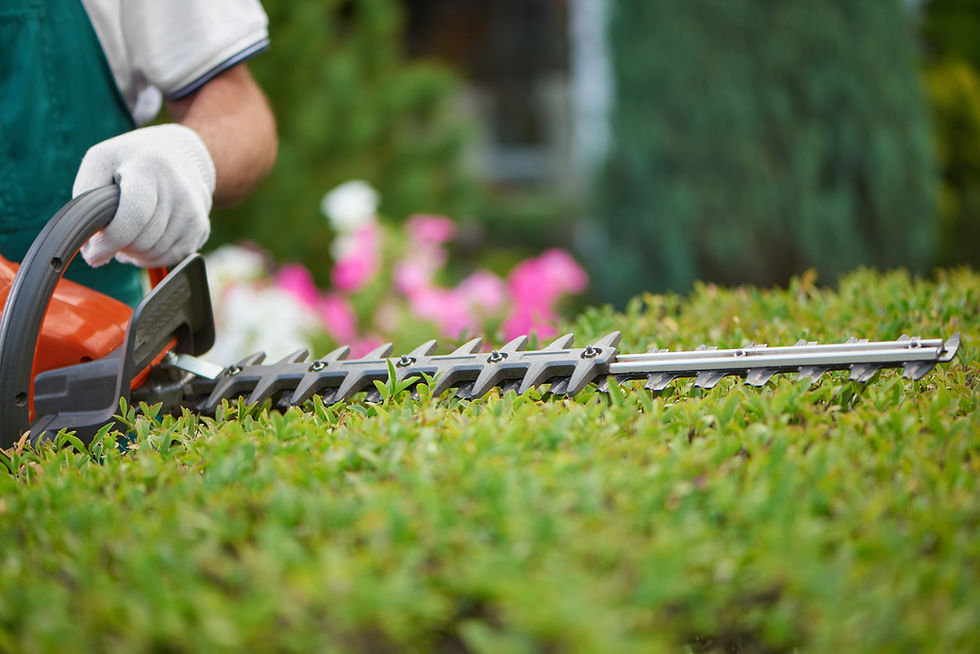
Ask the Expert: How Often to Cut Back Hedges?
For most established boundaries, the answer to how often to cut back hedges is once or twice a year, although fast-growing or highly formal varieties may need attention up to three times during the growing season.
The right schedule depends on the species, age, desired appearance and wildlife using the garden. Timing matters just as much as frequency. Working at the wrong point in the year can affect new growth, flowering and wildlife habitat.
RHS guidance states that informal varieties are usually dealt with once a year, while formal specimens may require attention once, twice or three times annually.
How Often to Cut Back Hedges in a Typical UK Garden?
There is no single timetable that suits every garden.
For many established boundaries, one good annual tidy is sufficient. A more formal screen that needs to retain straight sides and a defined top may require two or three visits.
RHS advice provides a useful general guide:
-
Informal Planting: Usually requires attention around once per year.
-
Formal Planting: May need work one, two or three times each year.
-
Fast-Growing Varieties: Often need more regular management during active growth.
-
Young Planting: May require formative attention while it develops its shape.
The aim is not simply to remove as much growth as possible. Regular, controlled work can encourage dense foliage while keeping the boundary at a manageable height and width.
For professional help, see M.A.C Tree Care's hedge and shrub maintenance service.
What Is the Best Time to Trim Hedges?
The best time to trim hedges depends heavily on the plant variety.
RHS guidance gives different schedules for commonly grown species. Holly is generally dealt with in late summer, hornbeam in mid to late summer, and beech in late summer. Privet can require attention two or three times during the growing season. Leyland cypress may also need two or three visits while actively growing.
This is why identifying what is growing in your garden is important before deciding on a routine.
Flowering varieties can require a different approach because working at the wrong time may remove buds before they open. Several flowering varieties are best dealt with immediately after flowering rather than according to a general calendar.

How Does Seasonal Hedge Cutting Change Through the Year?
A sensible seasonal hedge cutting plan considers both plant growth and wildlife.
What Should You Do in Winter?
Winter can be useful for certain more substantial jobs, particularly on dormant deciduous varieties.
RHS recommends undertaking major renovation of deciduous boundaries during midwinter while they are dormant and leafless. More drastic reductions are often better phased over two or three years rather than attempted in a single session.
Before starting any work, the planting should still be checked carefully for wildlife.


What Should You Do in Spring?
Spring is a period of active growth for many garden plants, but it is also when bird breeding activity becomes an important consideration.
Evergreen renovation is generally better suited to mid-spring after the risk of severe frost has passed. However, wildlife must always be considered before work begins.
Light maintenance may be appropriate for some varieties, but never assume that a calendar date automatically makes work safe.
What Should You Do in Summer?
Summer is commonly used for controlled maintenance and shaping.
For example, the RHS recommends late-summer attention for beech and hornbeam, while certain faster-growing formal varieties may need several visits across the growing season.
However, summer also overlaps with the main bird breeding period, so careful checks are essential.


What Should You Do in Autumn?
Early autumn can be useful for a final tidy on suitable varieties once breeding activity has reduced.
The exact timing should still reflect the species and conditions. Avoid aggressive work merely because growth has slowed. Conifers in particular can respond badly if someone goes too far into older material.
RHS warns that most conifers do not regenerate successfully from old wood, which makes regular controlled management particularly important.
What Should You Do About Nesting Birds in Hedges?
This is one of the most important considerations.
The RSPB identifies March to September as the main nesting period and recommends avoiding vegetation work during this period where possible. It suggests carrying out routine work between 1 September and 28 February, while still checking for active nests because some species can breed outside the typical window.
There is also a legal requirement to consider.
Under the Wildlife and Countryside Act 1981, it is an offence to intentionally take, damage or destroy the nest of a wild bird while that nest is being used or built. GOV.UK also identifies vegetation management as an activity capable of affecting breeding birds.
If you find an active nest:
-
Stop Work: Do not continue in a way that could damage the nest.
-
Leave Space: Give the birds sufficient undisturbed surrounding vegetation.
-
Wait: Resume routine work after the nest is no longer active.
-
Seek Advice: Get professional guidance where there is uncertainty or an urgent safety issue.
The important distinction is that there is not a blanket legal ban on gardening work throughout the whole breeding period. The law protects active nests, while the March to September recommendation is a practical precaution intended to reduce the risk of disturbing breeding wildlife.

Does Hedge Trimming Frequency Depend on the Species?
Yes. Hedge trimming frequency can differ considerably.
Privet, box and Leyland cypress can require several light visits during active growth if you want a crisp formal appearance. Holly commonly needs just one main session in late summer, while beech and hornbeam can often be maintained annually.
The appearance you want also matters.
A relaxed wildlife-friendly boundary does not need to look perfectly squared throughout the year. Allowing some flowering and fruiting growth can increase its value to birds and other garden wildlife.
RSPB guidance recommends considering less frequent intervention where appropriate so plants can flower and produce fruit.
Can You Reduce an Overgrown Boundary in One Go?
Sometimes, but drastic reduction is not always the healthiest option.
If a mature screen has become substantially too high or wide, the safest horticultural approach may involve renovation over several seasons.
RHS guidance recommends spreading major renovation involving more than half the height or width across two or three years.
Certain conifers require particular care because removing growth beyond the green foliage can leave permanent bare areas.
If the job involves significant height, difficult access, powered equipment or uncertainty over how the plant will respond, professional assessment can prevent costly mistakes.


How Can Regular Hedge Maintenance Help?
Good hedge maintenance is about more than appearance.
A sensible routine can:
-
Control Size: Prevent excessive spread into pathways, neighbouring land or other garden areas.
-
Maintain Density: Encourage an attractive, well-filled boundary.
-
Improve Access: Keep entrances, paths and driveways clearer.
-
Avoid Severe Renovation: Small regular interventions can prevent a much larger job later.
-
Protect Wildlife: Planned timing makes it easier to minimise disturbance.
RHS guidance also notes that regular management helps established boundaries remain dense and within their intended dimensions.
When Should You Call a Professional?
DIY work may be reasonable for a small, accessible garden boundary. Larger specimens present different risks.
Professional assistance is sensible when the planting is exceptionally tall, access is restricted, powered equipment would need to be used at height, substantial reduction is required or you are uncertain about the species.
M.A.C Tree Care provides professional maintenance for residential and commercial clients, with a friendly, tidy and safety-conscious approach.
You can also read our seasonal guide to trimming for further advice.
Ask M.A.C Tree Care for Expert Advice
So, how often to cut back hedges?
For most established garden boundaries, once or twice each year is a sensible starting point. Formal or vigorous varieties may need up to three sessions, while some informal planting requires only one.
Species, condition, desired shape, season and nesting wildlife should all influence the decision.
If yours has become too tall, untidy or difficult to manage safely, contact M.A.C Tree Care for practical advice and a quotation.
Areas We Cover
Borough of Bexley
Thamesmead, Abbey Wood, Belvedere, Erith, Northumberland Heath, East Wickham, Welling, Bexleyheath, Barnehurst, Crayford, Blackfen, Blendon, Bridgen, Bexley, Halfway Street, Longlands, North Cray, Sidcup, and Foots Cray.
Kent
Borough of Bromley
Sevenoaks
Borough of Greenwich
London - for larger projects, we cover the wider areas of London

Working Hours
Monday 7 am–5 pm
Tuesday 7 am–5 pm
Wednesday 7 am–5 pm
Thursday 7 am–5 pm
Friday 7 am-5 pm
Saturday 7 am–5 pm
Sunday Closed